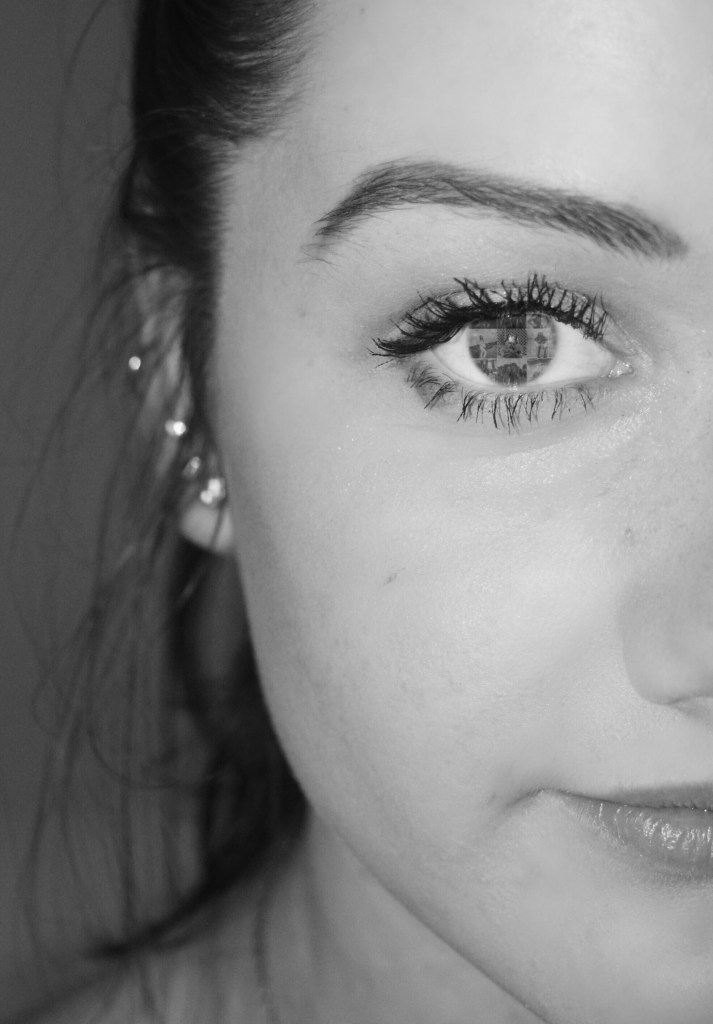
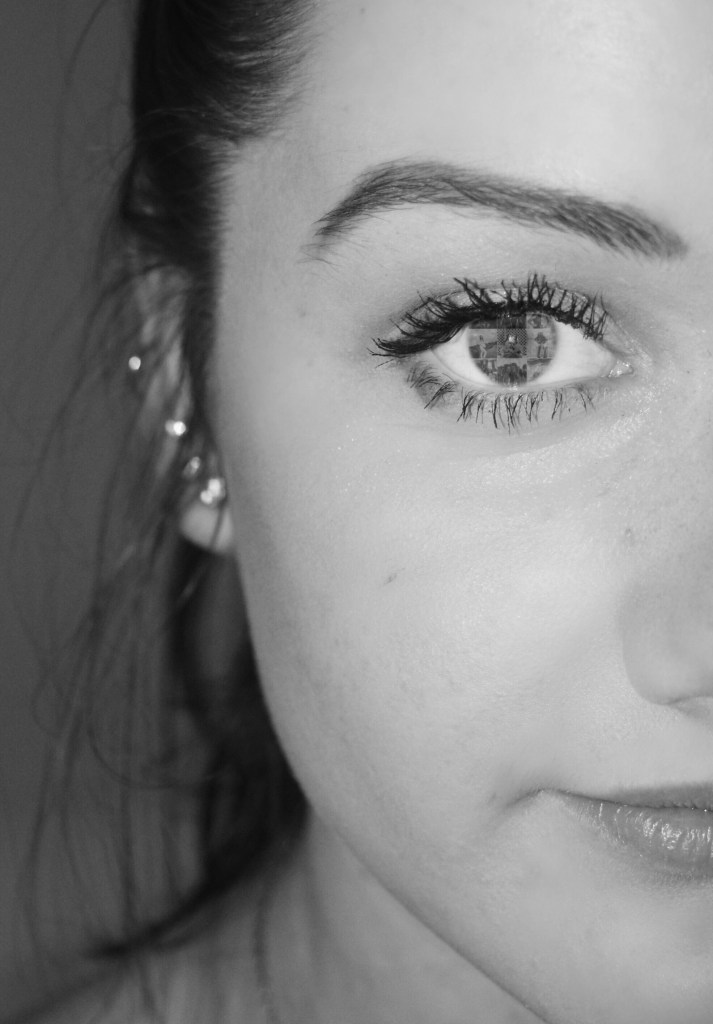
My digital image represents my digital self because it encapsulates how my extensive use of social media has been programmed into how I function on a daily basis. I am constantly thinking about what I can post to make others like me or accept me, even if I don’t end up posting anything because of my desire for perfection that is so rarely quenched. This obsession with the media has affected me in everything that I do, even to the very fact that I am majoring in Media Studies. The image showcases how a media screen is always on my mind, even subconsciously, by incorporating a screenshot of my Instagram profile onto my eye. This photo is in portrait because it works to showcase close up emotions and details that would have been lost if it was in landscape mode. I utilized the camera focus and rule of thirds to draw the viewer’s eye to the eye in the photograph by blurring out the background and placing the eye where the lines would naturally intersect. This worked to bring attention to the image presented in the eye due to the story that it tells. The digital image has not been revised because of the positive feedback I received that verified my own satisfaction with the original piece.
My digital video file represents my digital self because it mimics how I used to present myself in the YouTube videos I would make. I would utilize jump cuts in editing for quick entertainment and showcase an outgoing “on-screen” personality so that the audience felt like the content was relatable and easy to watch. My digital self usually presents a life free of media use, as I post about places I go or experiences I have, and not all the time I spend on my phone. This project dives into my mind when I was taking a lot of life experiences for granted before I was stuck with just media and technology in quarantine. I see this video as my real self talking to my digital self. This portrayal explains how much I relied on the media until it was all I had. I utilized natural lighting and a makeshift tripod for a solid foundation to create a smooth piece. This worked to create a sense of professionalism that the audience can recognize and appreciate. I used a shotgun microphone so that the sound in the video was clear, which translates to a clear message as well. Other principles, like using a close up and including light background music, created emotion and added detail to the piece that worked to make it a complete video. I did not revise this project because of the perfect score I received on it. However, if I were to recreate the video, I would have made the interviewer look more like I look everyday in quarantine in order to create a more realistic and comical element. I could even play with the lighting to emulate how the audience should feel instead of using the same lighting for each version of myself.
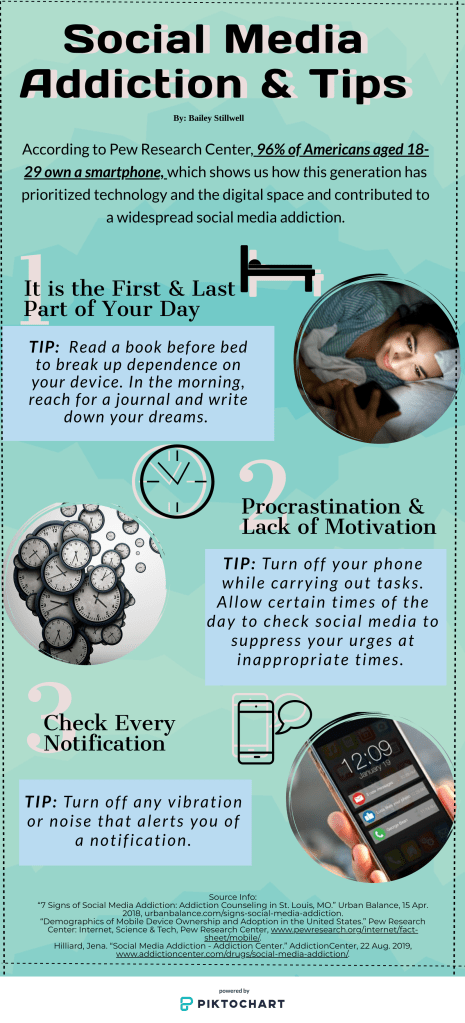
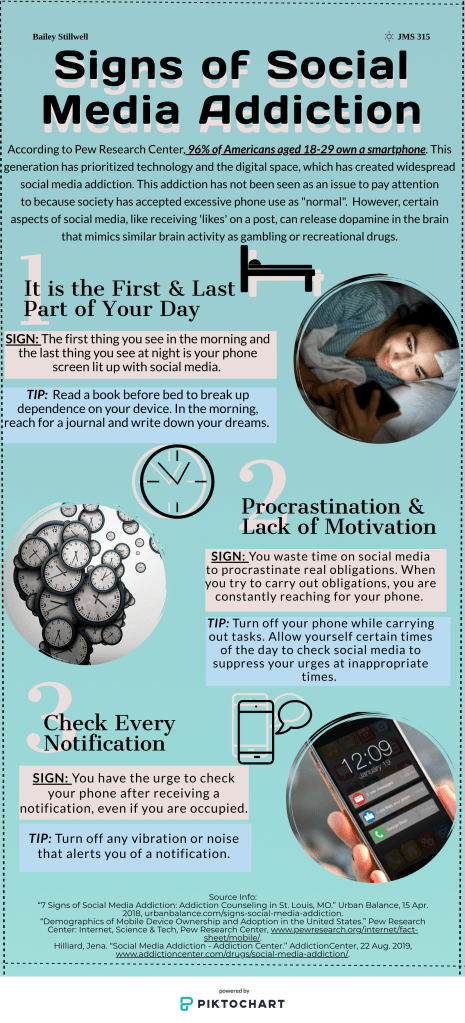
My Infographic represents my digital self because it mirrors my inner worries of how toxic my use and reliance on social media is. I often find myself having similar problems to what is outlined on the Infographic, so I knew that others probably had similar problems as well. I used bright colors and aesthetic design to draw in the viewer, but the message was much more serious than it appeared. This parallels how I present myself on social media. I worked to make the infographic insightful and truthful while focusing on an evident key purpose. In my revision of my infographic, I made the words more readable by shortening the amount of text there was and sizing up the remaining text. I also fixed other critiques like moving the byline under the headline and changing the title to make it less confusing. Overall, the balance of elements and new clarity help to make this piece more unified and readable.
My digital self encapsulates the essence of my real life self, however, it is a much more polished and particular version. In an age of “influencers” and impossible lifestyle standards, how I portray myself online attempts to mimic the content that I see, which can sometimes confuse my own identity. I choose to post about the most exciting parts of my life, while I keep the uglier parts in the dark. I often keep my digital self in a bright and fun presence, because I subconsciously want others to envy my life like I envy others’ lives. My digital assignments represent my digital self because on their surface they are nice to look at, but they carry a deeper story when you read between the lines, much like how I present myself on social media. My digital image looked like a crisp photograph of half of my face, however when you searched deeper you could see my Instagram profile. This represents how social media has created a lens for me that searches for the next perfect post I could get validation from. My video project is bright and silly, but it underlines how our world can often be hidden by rose colored glasses, even in the whirlwind nature of life in these times. The infographic was aesthetically pleasing to the eye, but contained information about how our lives are attached to a fictional world that fits in our back pocket.
This class has helped me better understand digital media principles and design because it has laid out all the fundamentals that I was not aware even existed before. I have experience in many digital avenues, although the experience is limited to surface level abilities and understanding that this class has now expanded and grown into a usable tool set. I now have a foundation for a professional life in the media industry because I can comprehend certain design principles that will be helpful in many different paths of work. It has become clear that media designs are no mistake. I now recognize that there are certain ways that content is portrayed and outlined so that the intended audience will be affected by it in a specific way in order to achieve a goal.
The digital media principle and design that resonated with me the most was the video design components. This is due to my background with both online video production and traditional video that has interested me since I was very young. I have never taken an official instructional class about the principles of what makes a generally “good” piece of video, and I was excited to learn about different aspects of a shot that could exemplify a different tone or emulate a more beautiful picture. Learning about the different names for a variety of camera angles and elements will definitely set me up for a future in entertainment. I especially appreciated the tips for filming like bringing extra batteries or doing a dry run before the actual take in order to better prepare for a successful future.
When creating my three projects of video, photo, and infographic design, the hardest part was conceptualizing an idea that I could recreate and successfully capture. I thoroughly enjoyed creating these pieces because I had gotten so lost in the race of college life and school that I had forgotten to take time to create things that I love. I am used to taking photographs and filming videos because I have been doing them for so long, but needed to get back in the grove of it. I needed to find my voice again. I was excited to play with what I had learned in the class and add it to my own usual practices in order to create a mold of professionalism and personality. I was less familiar with making content like an infographic, which is why my original piece could have been better. I struggled to get all of my thoughts onto the spread without overcrowding the content, so I can definitely still improve there. I loved the challenge of doing something I had never worked on before.
In making my digital photograph, I used my Canon 80D camera which I already had from my years of making YouTube videos. I utilized the lights I had in my room for lighting, and edited the final picture in an online editing program called PicMonkey. I used these tools because they are products and applications that I am already pretty familiar with. In making my digital video, I used the same camera, a makeshift tripod for stability, and natural lighting from my bedroom window. I used FinalCutPro to edit the video because I used the application when editing my old YouTube videos and was comfortable with what I could do. In making my Infographic, I used the provided online program, Piktochart. This program was relatively easy to figure out because I chose a stencil and worked from there to personalize and customize the piece.
Challenging moments for the digital assignments existed in the beginning of each process, like I expressed earlier in this essay. One of my biggest hardships always surrounds being sure enough in an idea for a project that I will be proud of the outcome, so I usually have conflict within myself because of my fear of failure. I always wanted each project to speak for itself and emulate who I was as a digital media consumer and producer. I often struggled with finding a balance between reality and possibility. Once I was confident in a concept, I did not have much trouble when it came to executing the projects due to their short nature and my familiarity with most of the mediums.
Some of the most enjoyable moments of completing the digital projects was the feeling of satisfaction after I had completed each one. Even if they had not come out perfect, the struggle to develop a project that was true to my digital self was worth it in the end because I had created something. I had let go of creating content that I had been so passionate about in the past, and I fell in love with it all over again when I was able to see what I made all on my own again.


 Bailey Stillwell's Blog